Those who have ever broken a bone have probably heard that their injury will heal weaker than the rest of their bones. Perhaps they’ve also heard that bones will heal to be stronger than before its fracture. Is there any way to determine which is true? The specter of athletic injury will always be hanging over a competitive athlete’s head. Musculoskeletal injuries can be found in all levels of sport and exercise. These injuries can be caused by a combination of factors such as repetitive training increasing stress on the bone, or by direct trauma.
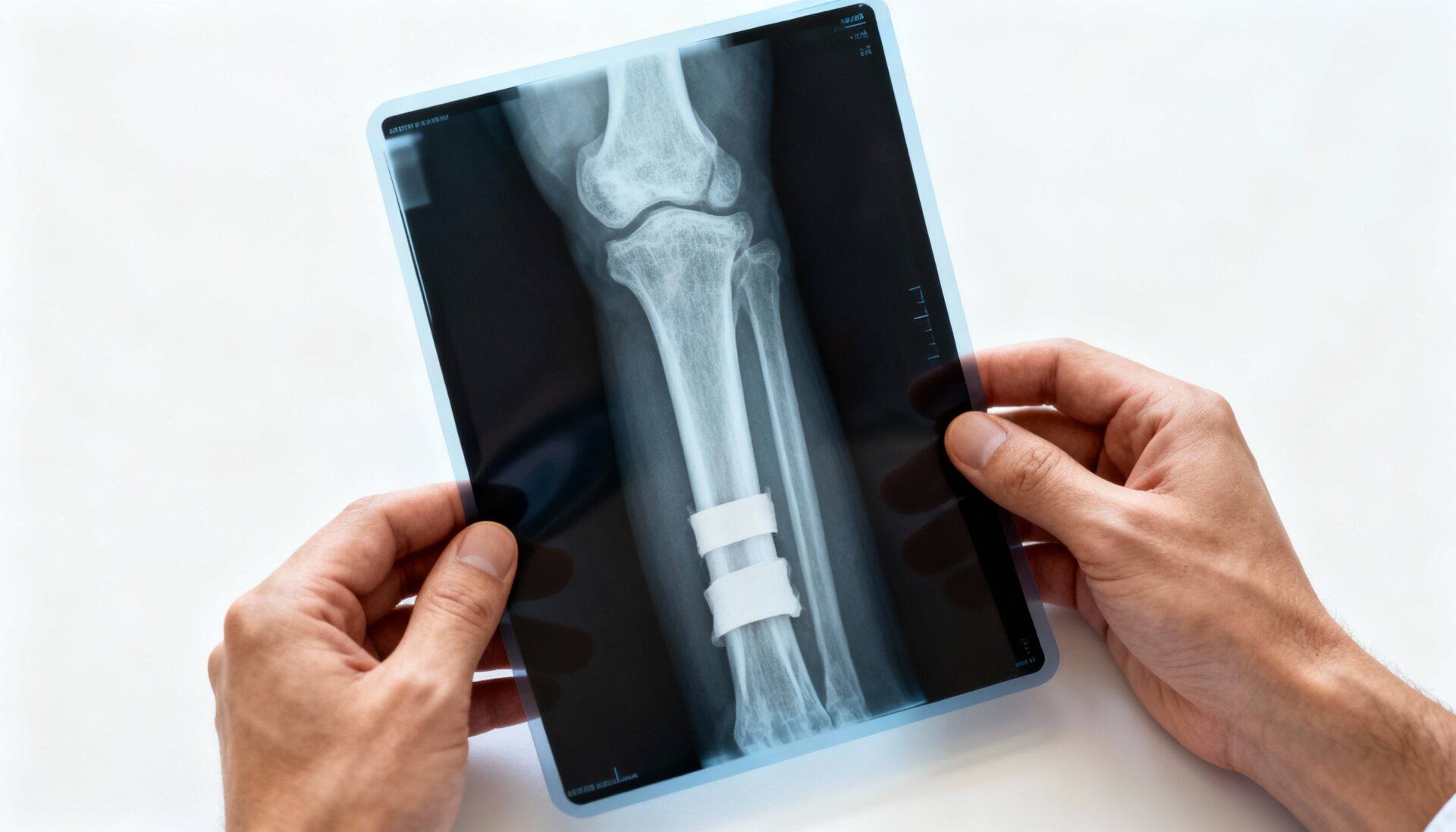
To answer the question of post-fracture bone strength, we must understand the process through which a bone heals. According to the Director of Pediatric Orthopedic Surgery at Montefiore Medical Center, the process begins with a blood clot forming over the injured area as a protection mechanism. Over a couple days, a soft callus made of collagen forms to help reconnect the fractured edges of the bone. The bone gradually becomes harder as calcium is deposited to aid rebuilding. Then, new cells form at the fracture site to reconnect the bone tissue. Eventually, the fractured bone returns to its normal shape once the edges have reattached.
There is still the question of healed bones being stronger or weaker after a fracture. The question can be explained using Wolff’s Law, developed by German anatomist and surgeon Julius Wolff. Wolff’s Law states that a healthy bone will adapt relative to the load under which it is placed. If the pressure increases, the bone will be remodeled over time and become thicker and stronger to resist the imposed pressure. However, if the pressure decreases, the bone will become less dense due to the reduced force necessary for continued remodeling. This law can easily be seen in tennis players. According to a 2022 publication, their dominant playing arm may be up to 20% thicker than the bones in their non-dominant arm. The injured area undergoes rapid mineralization and there is a brief period in the healing process where the fracture site is stronger than the surrounding bone. Later, however, it reaches equal strength because of the lack of stimulus on the healing bone. For example, using plaster casts to recover from bone injuries may cause muscle atrophy because of disuse. All of this means that bones are no more or less likely to break again after a fracture as they are of equivalent solidity.
Although bones heal to a normal and equal strength after a fracture you may still experience pain or discomfort. However, it’s not the bone, itself, that is the issue. According to a 2012 paper from Evercore Injury Recovery, “some people experience chronic pain from fractures like a broken ankle even years after the initial injury occurred.” The persistent pain after a fracture is usually caused by ongoing inflammation of the joints and tissue surrounding the bone. Typically, there is acute inflammation that occurs at the time of injury. But continued inflammation can be a sign that the healing process has either been interrupted or that there may be additional damage. If experiencing pain long after an initial injury, an anti-inflammatory diet may help. This type of diet favors fruits and vegetables, foods containing omega-3 fatty acids, whole grains, lean protein, healthful fats and spices. It should cut out processed foods, refined sugars and excess carbs, according to a 2020 report. According to the report, turmeric extract can also help. The active compound in the plant, curcumin, possesses anti-inflammatory and pain-relieving properties.
But don’t let your fracture keep you on the sidelines. After an injury, you must put in the work to get back to your prior activity level. Healthy habits can help with bone strengthening. According to a 2021 study at Hackensack Meridian Health, eating calcium rich foods like cheese and other dairy products, green vegetables and fortified foods and beverages help strengthen and restructure bones. Eating foods rich in Vitamin-D is also advisable as it helps the body to better absorb the calcium. Other healthy habits include exercising regularly (especially weight bearing exercises), ceasing smoking and limiting alcohol intake. The 2021 study stated that, “”When women have more than 1 drink per day or men have more than 2 drinks per day, it increases the risk of osteoporosis.” If your diet isn’t as rich in calcium or Vitamin D, you may ask your doctor if you should take daily supplements to boost intake.
To prevent further injury, some precautions should be taken. Learning to play within your limits by starting slowly and working up. This will allow your body to adapt to the physical demands of the activity. Taking breaks between exercising also allows your body the time it needs to heal properly between sessions. Some general tips to preventing sport injuries include wearing the recommended safety equipment, having properly fitted gear, and being aware of the heat and your exertion level. Stretching prior to any exercise will help warm your muscles. Drinking plenty of fluids to replenish those lost through sweat. Another important reminder is that you should not be in physical pain. If something hurts, you should stop the activity. There could be more serious issues that will only worsen by adding too much additional stress.
Sometimes recovery takes a measure of mental toughness alongside physical rehabilitation. Many scientists and athletes believe that there is a strong mind-body connection that can affect healing. It is understandable that any kind of trauma to the body can lead to negative thoughts. Alia Crum, PhD Assistant Professor of psychology at Sanford University stated that “what patients think and expect about treatments can influence health outcomes.” If patients constantly think negatively about their healing process, it may be harder for them to restore their level of activity. If those feelings are left unchecked, they can lead to anxiety and stress which can raise cortisol levels that increase blood pressure and inflammation (Bone & Joint, 2022). Depression is also a major concern during the healing process. It is understandable becoming discouraged and irritable when simple daily movements like walking to the kitchen become more difficult because of an injury. However, these undesirable daily pains won’t be relieved if a depressed mental state continues. Depression can also suppress the immune system’s productivity and can drain motivation, making it harder to continue with doctor recommended instructions and exercises (Bone & Joint, 2022). It can interfere with sleep as well as decrease your appetite, depleting you of beneficial nutrients, causing slower healing. But according to Bone & Joint Surgery Centers, there is light at the end of the tunnel. There are ways to help prevent these negative thoughts. Sharing your feelings, especially with your family and friends, may lead to valuable support through your recovery journey. It may also be helpful to share your feelings with your healthcare provider or a counselor as it may feel easier to handle if you find out you’re not alone in your situation. It is best to trust them enough to follow their recommendations. They are here to help you. For some people, it’s comforting to know what to expect in the rehabilitation process. So, learning everything about your injury and recovery process can also be beneficial so that you’re not blindsided. In general, a warmhearted home support system and an understanding health care team can aid you in making your recovery process a positive one.
The truth is that whether a bone is stronger or weaker after an injury depends upon the person that was injured. If they have a strong mental state, they are more likely to increase bone mineralization after their injury. If they lack the mental strength to better themselves after an injury, the opposite often happens. Taking poor care of yourself, mentally and physically, before and during recovery will negatively impact how you will come back. So, make sure to continue with activity, eat right and be aware of your body or it may come back to haunt you!
References
Bone & Joint. (2022, February 23). How do our thoughts affect our healing? Bone & Joint. Retrieved November 28, 2022, from https://bonejoint.net/blog/how-do-our-thoughts-affect-our-healing/
Fletcher, J. (2020, January 3). Anti-inflammatory diet: Food list and tips. Medical News Today. Retrieved November 28, 2022, from https://www.medicalnewstoday.com/articles/320233
Lu, M. (2021, August 2). Do broken bones heal stronger? Hackensack Meridian Health. Retrieved November 28, 2022, from https://www.hackensackmeridianhealth.org/en/HealthU/2021/08/02/do-broken-bones-heal-stronger#.Y3bI-y-B3BK
McPhail, S., Dunstan, J., Canning, J., & Haines, T. (2012, November 21). Home – PMC – NCBI. National Center for Biotechnology Information. Retrieved November 28, 2022, from https://www.ncbi.nlm.nih.gov/pmc/
O’connor, A. (2010, October 18). The claim: After being broken, bones can become even stronger. The New York Times. Retrieved November 28, 2022, from https://www.nytimes.com/2010/10/19/health/19really.html
Robinson, D. M. (2020, October 23). Why does your broken ankle hurt years later? – evercore – move with a strong, healthy body. Evercore. Retrieved November 28, 2022, from https://www.evercorelife.com/why-does-your-broken-ankle-hurt-years-later/
Sad on the sidelines? reducing the risk of sports injuries. Orthopaedic Associates of Central Maryland. (2019, November 8). Retrieved November 28, 2022, from https://www.mdbonedocs.com/sad-on-the-sidelines-reducing-the-risk-of-sports-injuries/
Who’s afraid of the big bad Wolff?: “Wolff’s law” and bone functional adaptation. Home | ND Department of Veterans Affairs. (n.d.). Retrieved November 28, 2022, from https://www.veterans.nd.gov/sites/www/files/documents/resource/Wolff’s%20Law.pdf