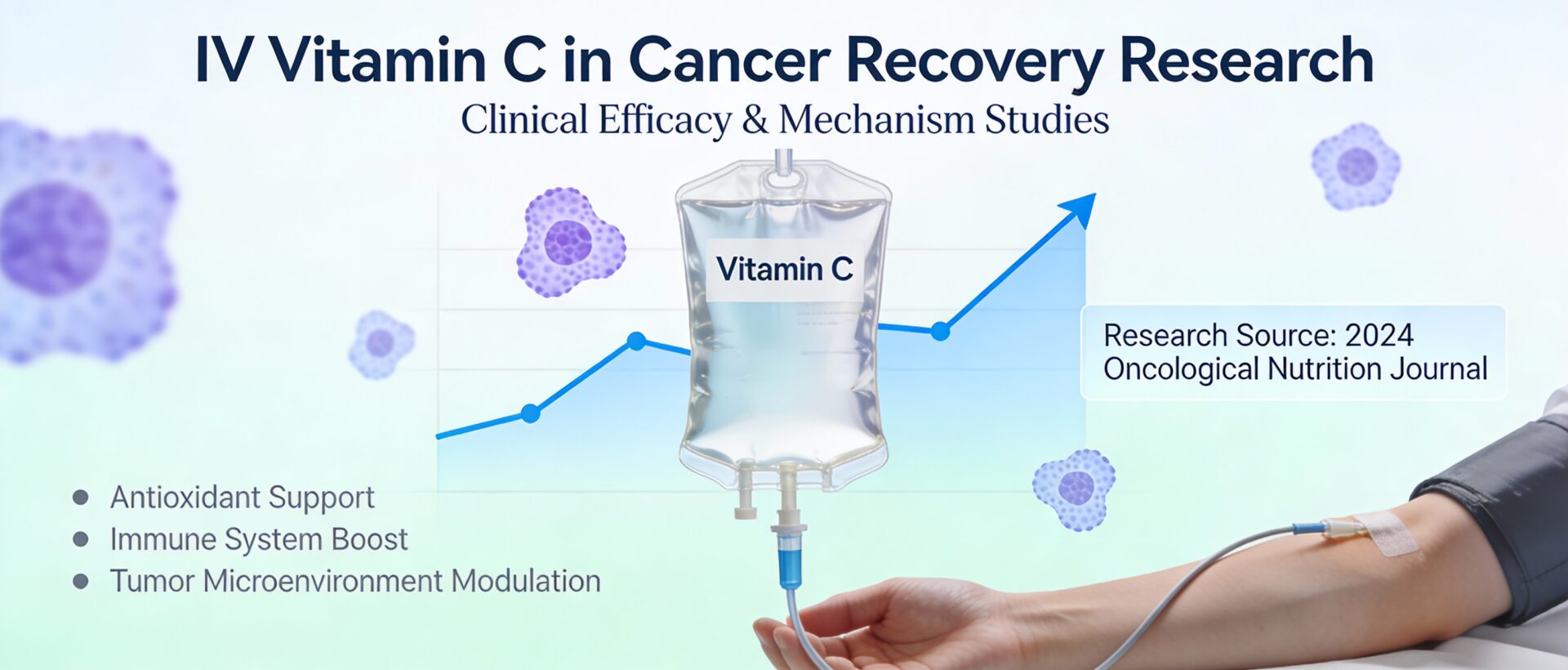
The science of high-dose intravenous ascorbic acid is evolving beyond immune support. Here’s what the latest research tells us about combating debilitating fatigue and optimizing physiological function.

For decades, vitamin C has been pigeonholed as little more than an immune booster, something you slam when you feel a cold coming on. But emerging research from oncology reveals a far more compelling story, one that speaks directly to anyone pushing their body to the limit and demanding optimal recovery.
A growing body of clinical evidence demonstrates that intravenous vitamin C administration dramatically improves quality of life metrics in cancer patients battling treatment-induced fatigue. While these studies focus on oncology populations, the underlying mechanisms have direct relevance to performance athletes, coaches, and anyone serious about understanding how the body recovers from extreme physiological stress.
This isn’t about curing disease. It’s about understanding what happens when vitamin C bypasses the gut and reaches plasma concentrations impossible to achieve through oral supplementation. The implications for fatigue management, inflammation control, and cellular energy production deserve serious attention.
Why Intravenous Delivery Changes Everything
The fundamental limitation of oral vitamin C is intestinal absorption. Your gut has a regulated uptake mechanism that caps how much ascorbic acid reaches systemic circulation, regardless of how many grams you swallow. This biological bottleneck means oral megadosing hits a ceiling relatively quickly.
Intravenous administration bypasses this entirely.
When vitamin C is delivered directly into the bloodstream, plasma concentrations can reach levels 30 to 70 times higher than what oral intake can achieve.
This pharmacokinetic reality is not theoretical. It has been documented in multiple phase I clinical trials and represents the foundation for why IV vitamin C produces effects that oral supplementation cannot replicate.
Research published in Frontiers in Oncology confirms that these supraphysiological concentrations enable vitamin C to function through mechanisms that simply do not occur at normal dietary levels. At high doses, vitamin C acts as a cofactor for critical enzymatic processes involved in energy metabolism, neurotransmitter synthesis, and collagen production. It also demonstrates pro-oxidant behavior in specific contexts, generating hydrogen peroxide that may have therapeutic applications.
The Fatigue Connection: What Clinical Trials Actually Show
Fatigue is the most common and debilitating symptom reported by cancer patients undergoing chemotherapy. More than 75 percent of patients describe feelings of overwhelming tiredness and energy depletion that persist throughout treatment cycles and can continue for years after treatment ends.
Multiple prospective studies have now documented that IV vitamin C significantly reduces this fatigue burden.
A prospective study of 60 patients with advanced cancer administered IV vitamin C at doses ranging from 25 to 100 grams per session, twice weekly for four weeks. Using the European Organisation for Research and Treatment of Cancer Quality of Life Questionnaire, researchers documented statistically significant decreases in fatigue after just two weeks of intervention. Pain reduction became significant by week four. Improvements in physical, role, emotional, cognitive, and social functioning were observed, with overall global health status improving from a score of 45 to 61.
That represents a clinically meaningful shift in how patients experience daily life.
A separate study of 39 terminal cancer patients not undergoing chemotherapy found similar results with a lower dose protocol: 10 grams administered twice over three days, followed by 4 grams orally daily. The EORTC questionnaire showed significantly lower fatigue, pain, nausea, vomiting, and appetite loss scores. Global health scale scores improved from 36 to 55.
Multidimensional Fatigue: Not All Tiredness Is Created Equal
One of the most valuable insights from this research is the recognition that fatigue is not one-dimensional. It manifests across physical, emotional, and mental domains, each requiring measurement and potentially different interventions.
Researchers used the Multidimensional Fatigue Symptom Inventory to capture this complexity. Case studies documented in the New Zealand Medical Journal showed dramatic reductions across all fatigue dimensions following IV vitamin C administration.
A breast cancer patient undergoing chemotherapy with doxorubicin, cyclophosphamide, and paclitaxel received 50 grams of IV vitamin C twice weekly for four weeks. The multidimensional assessment showed decreases in general, physical, emotional, and mental fatigue, along with increased vigor. The patient’s global health status doubled.
An 81-year-old male with inoperable pulmonary angiosarcoma received 30 grams daily for seven consecutive days. Results showed a 37 percent decrease in fatigue, complete cessation of pain, nausea, and insomnia, and a 50 percent reduction in total fatigue across all measured dimensions.
“Any agent which can make, or even appear to make, the burden of terminal cancer more tolerable, deserves further study.” — Early vitamin C researchers on quality of life improvements
Reduced Chemotherapy Toxicity: The Translational Evidence
Perhaps the most compelling translational study examined 25 patients with stage III to IV ovarian cancer randomized to receive either chemotherapy alone or chemotherapy plus IV vitamin C at 75 to 100 grams twice weekly.
The results were striking. Grade 1 and 2 toxicities decreased significantly across nearly every evaluated category: neurological, bone marrow, hepatobiliary, pancreatic, renal, genitourinary, pulmonary, gastrointestinal, and dermatological.
Critically, this reduced toxicity did not compromise treatment efficacy. Survival outcomes were not adversely affected, suggesting IV vitamin C functions as a protective adjuvant rather than interfering with chemotherapeutic action.
A separate phase I study of IV vitamin C combined with gemcitabine for pancreatic cancer control reported decreased plasma F2-isoprostanes, a validated biomarker for endogenous oxidative stress. This provides mechanistic evidence that high-dose vitamin C reduces systemic oxidative burden during aggressive treatment protocols.
The Mechanisms: Why This Matters Beyond Oncology
Understanding why IV vitamin C produces these effects illuminates its potential relevance to high-stress athletic populations.
Carnitine Biosynthesis and Energy Production
Vitamin C serves as an essential cofactor for two enzymes required to synthesize carnitine. This molecule is critical for transporting long-chain fatty acids into mitochondria for beta-oxidation, the process that generates ATP from lipid metabolism. Without adequate carnitine, energy production from fat becomes compromised. This provides a direct biochemical pathway through which vitamin C deficiency could manifest as physical fatigue, and through which repletion could restore energy capacity.
Neurotransmitter Synthesis
Vitamin C acts as a cofactor in the synthesis of norepinephrine, dopamine, and serotonin. These neurotransmitters regulate mood, motivation, focus, and the perception of effort. Vitamin C also supports synthesis of neuropeptide hormones including oxytocin, which has documented mood-enhancing effects. The emotional and mental components of fatigue may be directly influenced by these pathways.
Anti-Inflammatory Action
Preliminary studies show high-dose IV vitamin C reduces biomarkers of systemic inflammation including C-reactive protein, tumor necrosis factor alpha, interferon gamma, and multiple interleukins. Strong evidence implicates inflammation in cancer-related fatigue specifically. For athletes, chronic inflammation from accumulated training stress represents a parallel challenge.
Antioxidant Capacity
At physiological concentrations, vitamin C functions as a potent free radical scavenger, protecting against oxidative damage. Cancer patients exhibit low circulating vitamin C levels despite comparable dietary intakes to healthy controls, suggesting increased metabolic turnover due to elevated oxidative stress. Athletes under heavy training loads face similar oxidative challenges.
Dosing Protocols and Administration Considerations
The studies reviewed used widely varying doses, from 7.5 grams weekly to 100 grams twice weekly. Interestingly, some evidence suggests the dose required for quality of life improvement may be significantly lower than doses typically administered as adjuvant cancer treatment.
A retrospective cohort study of 125 breast cancer patients found significant decreases in fatigue, depression, sleep disorders, and appetite loss with just 7.5 grams administered once weekly for a minimum of four weeks.
Pharmacokinetic data shows plasma vitamin C reaches maximum concentration at the end of infusion, then immediately begins declining with a half-life of approximately two hours. This informs the frequency of administration required for sustained effects.
The optimal dose for quality of life improvement specifically has not been definitively established. Future research needs to determine minimum effective doses and ideal administration intervals.
Limitations and the Path Forward
Intellectual honesty demands acknowledging the limitations of current evidence.
None of the quality of life studies included placebo controls. Given that subjective symptom measures like pain and fatigue can be influenced by placebo effects, this represents a significant methodological gap. Future studies must incorporate IV placebo controls to establish definitive efficacy.
Some studies combined patients with and without concurrent chemotherapy, and some included patients with different tumor types. Both factors likely influence symptom profiles and response to intervention.
Patient vitamin C status at baseline was not consistently measured or reported. Stratifying participants by pre-existing vitamin C levels could reveal whether depleted individuals respond differently than those with adequate status.
Phase I trials have established that high-dose IV vitamin C is safe and well-tolerated in cancer patients. However, optimal protocols for different populations and objectives remain undefined.

The Bottom Line for Performance-Focused Readers
This research was conducted in oncology populations facing extreme physiological stress. Direct extrapolation to healthy athletes requires caution and additional study.
However, the documented mechanisms are not disease-specific. Carnitine synthesis, neurotransmitter production, inflammation modulation, and antioxidant protection are fundamental physiological processes relevant to any human operating under high physical demands.
Cancer patients are not the only population experiencing chronic fatigue, systemic inflammation, and depleted recovery capacity.
The consistent finding across multiple studies that IV vitamin C improves multidimensional fatigue and quality of life metrics warrants attention from anyone serious about understanding recovery at the physiological level. The pharmacokinetic reality that intravenous delivery achieves plasma concentrations impossible through oral intake opens questions about whether current supplementation practices capture the full potential of this essential nutrient.
Well-designed placebo-controlled trials in athletic populations would provide clearer answers. Until then, this research offers a compelling framework for thinking about vitamin C beyond the supplement aisle basics.
Key Takeaways
- IV vitamin C achieves plasma concentrations 30 to 70 times higher than oral supplementation
- Multiple clinical studies document significant reductions in fatigue, pain, and nausea with improved overall quality of life
- Mechanisms include support for carnitine synthesis, neurotransmitter production, and inflammation reduction
- Doses as low as 7.5 grams weekly showed measurable quality of life improvements
- Future research with placebo controls is needed to establish definitive efficacy across populations