
Nutrition, Inflammation and Recovery: Food and Energy
In this article
Nutrition can support recovery, but normal acute inflammation also helps tissue repair. This discussion connects dietary patterns, energy availability and inflammatory markers while distinguishing proposed mechanisms from guaranteed clinical benefits.
How are nutrition and recovery connected?
Nutrition is the process in which the nutrients necessary for bodily health and growth are ingested.
Nutrition is important to ensure the proper function of the body and how it responds to the stresses of Activities of Daily Living (ADLs).
Cleveland Clinic explains the inflammatory response in its 2022 CRP-test article: “When your body encounters an offending agent (like viruses, bacteria or toxic chemicals) or you have an injury, it activates your immune system. Your immune system sends out its first responders: inflammatory cells and cytokines. These cells begin an inflammatory response to trap bacteria and other offending agents or start healing injured tissue. The result can be pain, swelling, bruising or redness.”
What we consume everyday can affect the inflammation processes in our body and impact recovery.
How do acute and chronic inflammation differ?
Inflammation can be divided into two categories: acute and chronic.
Acute inflammation refers to the response the body has to sudden body damage, such as scraping a knee.
Chronic inflammation refers to the body continuously sending inflammatory signals to cells even when there is no outside stimulus.
Calder and colleagues’ 2009 review states, “Acute inflammatory reactions are usually self-limiting and resolve rapidly, due to the involvement of negative feedback mechanisms. Thus, regulated inflammatory responses are essential to remain healthy and maintain homeostasis.
However, inflammatory responses that fail to regulate themselves can become chronic and contribute to the perpetuation and progression of disease.”
It is important to regulate inflammation inside the body so the impact of disease due to inflammation is limited.
However, measuring low grade chronic inflammation has a number of limitations.
Studies typically use cellular biomarkers to record and monitor inflammation levels.
These biomarkers include activated monocytes, cytokines, chemokines, various adhesion molecules, adiponectin, and non-specific markers such as C-reactive protein, fibrinogen, and serum amyloid A.
These measures provide researchers a baseline marker for the body.
Key inflammatory pathways in the body are sympathetic activity, oxidative stress, nuclear factor kappaB activation, and proinflammatory cytokine production.
Chronic inflammation is involved in the process of many conditions like Alzheimer’s, asthma, cancer, heart disease, rheumatoid arthritis, ankylosing spondylitis, and Type 2 diabetes.
It is important to understand what steps may be taken to reduce inflammation.
What can dietary patterns and markers tell us?
The American Society for Nutrition article quotes Sears and Ricordi’s 2011 review as stating that “anti-inflammatory nutrition is the understanding of how individual nutrients affect the same molecular targets affected by pharmacological drugs.”
The nutrients consumed daily affect the biomarkers and how the body regulates inflammation.
Malnutrition is a contributing factor, together with other factors like age and stress, in both acute and chronic inflammation.
Findings from longitudinal observational studies such as the Women’s Health Initiative Observational Study and the Multi-Ethnic Study of Atherosclerosis provide context for dietary patterns.
Appropriate energy intake, fewer refined carbohydrates, soluble fiber and monounsaturated fats are considerations in this discussion, rather than a single best-defense prescription.
Observational findings do not establish a universal dietary target, and an optimal omega-6/omega-3 ratio has not been defined.
High polyphenol levels also have anti-inflammatory effects on the body.
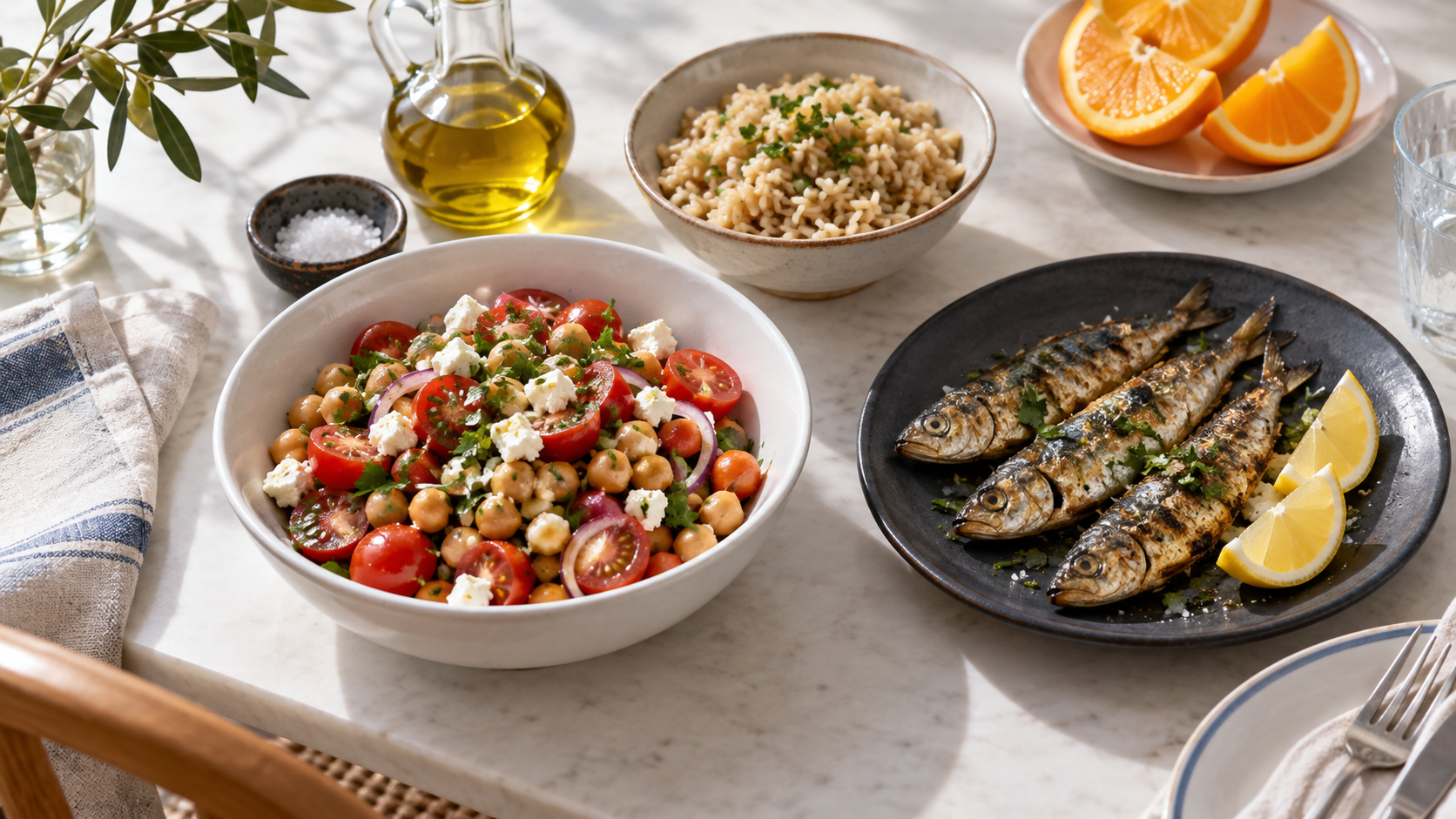
They suggest that a Mediterranean diet pattern, incorporating olive oil, fish, modest lean meat consumption, fruits and vegetables, legumes is a viable option.
The same 2009 Calder review also states, “Various dietary components including long chain ω-3 fatty acids, antioxidant vitamins, plant flavonoids, prebiotics and probiotics have the potential to modulate predisposition to chronic inflammatory conditions and may have a role in their therapy.”
Long chain ω-3 fatty acids, antioxidant vitamins, and plant flavonoids act in a variety of ways.
These include decreasing inflammatory mediator production through effects on cell signaling and gene expression and reducing production of damaging oxidants.
All this while promoting gut-barrier function and anti-inflammatory responses in which prebiotics and probiotics play a role.
How do energy and dietary fats support recovery?
Inflammation plays a crucial role in the recovery process.
Acute inflammation is part of normal tissue repair.
Persistent or dysregulated inflammation can be harmful; the aim is not to suppress every normal inflammatory response.
Recovery is defined as the return to a normal, pre-morbid state of health, mind or strength.
Adequate energy supports repair, while nutrients supply material for it.
The cited Geoff Lecovin piece is a NASM nutrition-education article, rather than a 2022 research paper.
Energy availability is the dietary energy remaining for normal body functions after exercise energy expenditure is accounted for.
Low energy availability occurs when there is an imbalance between intake and expenditure resulting in an energy deficit.
Low energy availability can impact reproductive function, skeletal integrity, immune health, training, performance, and recovery.
It can also be a risk factor for both macro and micronutrient deficiencies.
Consuming the optimal protein and carbohydrates are key to stimulating recovery.
However, during the recovery process fats are important as the energy source, for hormone production and inflammation reduction.
Dietary patterns and fatty-acid intakes vary.
The cited 18:1 omega-6/omega-3 estimate is not a fixed description of every American diet or an established target, and omega-6 fats include essential fatty acids.
Fish can supply long-chain omega-3s.
Grass-fed beef and eggs can contribute nutrients, but they are not equivalent sources of EPA and DHA.
Adequate essential fats and the overall eating pattern matter more than a blanket instruction to limit omega-6.
However, many attempt to combat inflammation and stimulate recovery by ingesting antioxidant supplements like vitamins A, C, E and the minerals Selenium and Zinc.
Excessive antioxidant supplementation can be harmful to the body and could be affecting the skeletal muscle remodeling process following intense resistance training.
How can balanced nutrition support recovery?
Supporting normal recovery while addressing excessive or persistent inflammation is different from trying to eliminate inflammation altogether.
Nutrition also plays a role in how our body can reduce the inflammation.
A balanced eating pattern can include olive oil, fish, modest lean meat, fruits, vegetables and legumes.
These food choices do not guarantee faster recovery or treat disease.
Physiology is the key element that makes it beneficial. However supraphysiological doses of supplements can be detrimental to recovery.
References
Dimitratos, S. (2018, March 16). Inflammation: What is it, and how can my diet and behavior affect it? American Society for Nutrition. Retrieved July 25, 2022, from https://nutrition.org/inflammation-what-is-it-and-how-can-my-diet-and-behavior-affect-it/
Calder, P. C., Ahluwalia, N., Albers, R., Bosco, N., Bourdet-Sicard, R., Haller, D., Holgate, S. T., Jönsson, L. S., Latulippe, M. E., Marcos, A., Moreines, J., M’Rini, C., Müller, M., Pawelec, G., Neerven, R. J. J. van, Watzl, B., & Zhao, J. (2013, January 23). A consideration of biomarkers to be used for evaluation of inflammation in human nutritional studies: British Journal of Nutrition. Cambridge Core. Retrieved July 25, 2022, from https://www.cambridge.org/core/journals/british-journal-of-nutrition/article/consideration-of-biomarkers-to-be-used-for-evaluation-of-inflammation-in-human-nutritioal-studies/9BCFFC03ABE69F78E20BE05846C1D502 DOI: https://doi.org/10.1017/S0007114512005119
Calder, P. C., Albers, R., Antoine, J.-M., Blum, S., Bourdet-Sicard, R., Ferns, G. A., Folkerts, G., Friedmann, P. S., Frost, G. S., Guarner, F., Løvik, M., Macfarlane, S., Meyer, P. D., M’Rabet, L., Serafini, M., Eden, W. van, Loo, J. van, Dias, W. V., Vidry, S., … Zhao, J. (2009, May 1). Inflammatory disease processes and interactions with nutrition: British Journal of Nutrition. Cambridge Core. Retrieved July 25, 2022, from https://www.cambridge.org/core/journals/british-journal-of-nutrition/article/inflammatory-disease-processes-and-interactions-with-nutrition/8B6E145706102090539C4CE52A58F35E DOI: https://doi.org/10.1017/S0007114509377867
Lecovin, G. (n.d.). Nutrition for Muscle Repair and recovery. NASM. Retrieved July 25, 2022, from https://blog.nasm.org/nutrition-for-recovery
Cleveland Clinic. (2022, May 17). C-Reactive Protein (CRP) Test. https://my.clevelandclinic.org/health/articles/23056-c-reactive-protein-crp-test
Sears, B., & Ricordi, C. (2011; published online September 30, 2010). Anti-inflammatory nutrition as a pharmacological approach to treat obesity. Journal of Obesity, article 431985. https://doi.org/10.1155/2011/431985
NIH Office of Dietary Supplements. Omega-3 Fatty Acids: Health Professional Fact Sheet. https://ods.od.nih.gov/factsheets/Omega3FattyAcids-HealthProfessional/
Brown, K. A., Dewoolkar, A. V., Baker, N., & Dodich, C. (2017). The female athlete triad: special considerations for adolescent female athletes. Translational Pediatrics. https://tp.amegroups.org/article/view/14901/html
“Nutrition is important to ensure the proper function of the body and how it responds to the stresses of Activities of Daily Living (ADLs).”
“It is important to regulate inflammation inside the body so the impact of disease due to inflammation is limited.”
“Energy availability is the dietary energy remaining for normal body functions after exercise energy expenditure is accounted for.”