
ACL Rehabilitation: Reconstruction and Return to Sport
In this article
Return to sport after an ACL injury takes more than an operation or a date on the calendar. Rehabilitation rebuilds movement, strength and confidence around the demands of the athlete’s sport.
The anterior cruciate ligament helps stabilize the knee. It limits forward movement of the tibia relative to the femur and contributes to rotational control. Running, landing and changing direction depend on the knee working with the rest of the leg. Surgery may be part of treatment; the operation and the return to sport remain separate milestones.
What does Derrick Rose’s comeback illustrate?
Derrick Rose was one of basketball’s most exciting young players. His speed, jumping ability and fearless drives helped make him the NBA’s youngest MVP at age 22 in 2011. A left ACL tear during the 2012 playoffs interrupted that career.
Rose missed the following season. His return in 2013–14 lasted only ten games before a right-knee meniscus injury created another setback. His comeback involved more than one knee injury.
For any athlete, the questions become personal: What will the knee tolerate? What does the sport demand? How will rehabilitation prepare the athlete to respond when a movement happens too quickly to think through?
Does every ACL tear require reconstruction?
ACL injuries vary in severity, and damage to the meniscus, cartilage or other ligaments can complicate the picture. Symptoms of instability—such as the knee giving way—also matter.
The American Academy of Orthopaedic Surgeons describes treatment decisions that take account of activity level, instability and associated injuries. Some people with partial tears and stable knees can be managed without surgery. Athletes who need to pivot and cut, or whose knees remain unstable, may be advised to consider reconstruction.
Physical therapy has a role in both paths. Reducing swelling, restoring movement and rebuilding strength help prepare the knee for greater demands. The plan needs to fit the injury and the person. The treating team decides when the athlete is ready for competition; a general recovery estimate cannot give that clearance.
What does an ACL graft replace?
ACL reconstruction generally uses a tendon graft to replace the torn ligament. An autograft comes from the patient’s own tissue; an allograft comes from a donor. Common autograft choices include patellar, hamstring and quadriceps tendons.
Each option has trade-offs. A bone–patellar tendon–bone graft includes bone at its ends. Other tendon grafts have different structures. The surgeon considers the athlete’s age, activity, previous procedures and the advantages and disadvantages of the available tissue.
Surgical techniques have evolved over decades. Restoring the ligament’s position and function is important, but no graft choice turns rehabilitation into an automatic process. The new tissue and the rest of the knee still need time and appropriately progressed loading.
How does rehabilitation prepare an athlete to return?
Earlier approaches often emphasized prolonged protection. Wilk and colleagues’ 2012 review discussed restoring motion, progressing weight-bearing and rebuilding muscle function. Those steps still need to respect healing tissues.
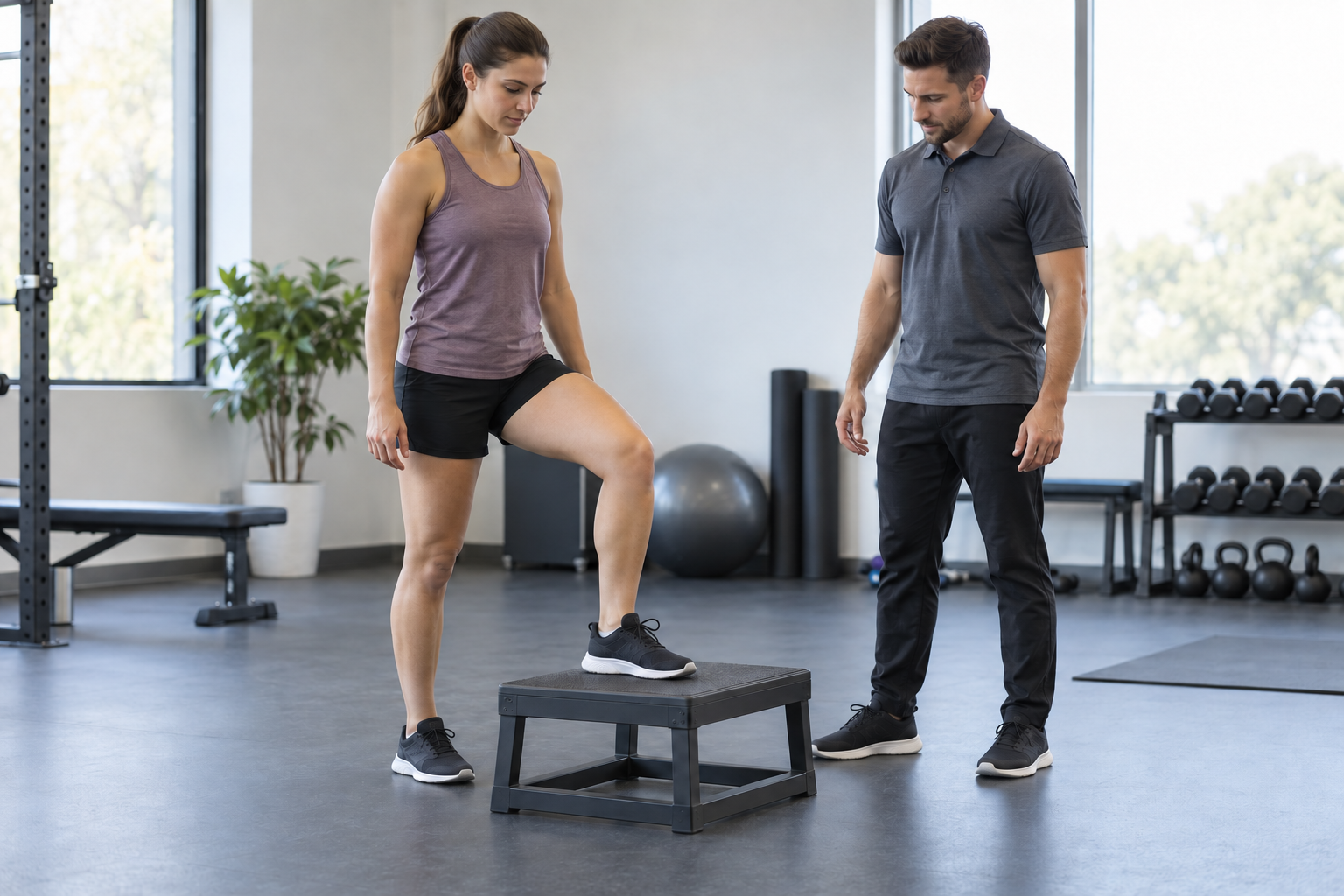
Progression means more than increasing exercise difficulty each week. The rehabilitation team follows swelling, range of motion, strength, balance and movement quality. These help show how the knee responds to the work. Running in a straight line also asks something different from landing, cutting or reacting to another player.
Athletes understandably want a date for their comeback. The more useful conversation includes what they need to be able to do by then. Returning to practice and returning to unrestricted competition can involve different demands, with decisions made alongside the treating team.
Where did BEAR repair fit in the original authorization?
The bridge-enhanced ACL repair, or BEAR, implant illustrates a different approach. The FDA granted the BEAR implant’s De Novo classification in December 2020. It covered skeletally mature patients aged 14 or older who had a complete ACL rupture and a stump attached to the tibia. The collagen-based implant provides a bridge intended to support healing of the torn ligament.
That original authorization concerned selected injuries and patients, rather than replacing reconstruction for every ACL tear. Anyone considering a procedure needs an evaluation of their own injury and the options available to them.
In a January 2021 column, surgeon Kevin Stone explored biological approaches to healing. Alongside scaffolds and growth factors, he considered the future possibility of using mRNA technology to encourage ligament cells to produce stronger, aligned collagen. That molecular idea was speculative in his 2021 discussion, part of the search for ways to improve ligament healing.
How can fear of reinjury affect rehabilitation?
Fear of another injury can complicate the return. Walker and colleagues surveyed 304 adults after ACL reconstruction in 2021. They asked about barriers and supports related to rehabilitation. Fear of reinjury was a barrier to rehabilitation adherence for 43.8% of respondents. Good relationships with health professionals were a commonly reported support.
Those findings give athletes and clinicians a reason to discuss worry, trust and the demands of the next stage together.
Rebuilding the knee and rebuilding confidence belong in the same plan. Clear goals, feedback and practice with progressively more demanding movements help make the work understandable. The wider connection between rehabilitation and mental well-being matters long before the first game back.
The hope is that treatment will keep improving, giving more athletes a sound path back to the activities they value. For now, a successful return is built through the patient work between the injury and the comeback.
References
Advent Health. (2019, November 4). 3 Advancements in ACL Injury Reconstruction. Advent Health Orlando. Additional source
Sports Reference. (n.d.). Basketball Reference. Retrieved April 18, 2022,
Stone, K. R. (2021, January 31). What is New in the ACL. The Stone Clinic.
Walker, A., Hing, W., Lorimer, A., & Rathbone, E. (2021). Rehabilitation characteristics and patient barriers to and facilitators of ACL reconstruction rehabilitation: A cross-sectional survey. Science Direct. Additional source
American Academy of Orthopaedic Surgeons. (n.d.). ACL Injury: Does It Require Surgery?
Walker, A., Hing, W., Lorimer, A., & Rathbone, E. (2021). Author institution publication record.
NBA. (2017). Derrick Rose out for season with torn meniscus; historical injury chronology.