
Adolescent Resistance Training: High Loads and Supervision
In this article
What should adolescent training take into account?
WHO defines adolescence as ages 10–19, a period of rapid physical, cognitive and psychosocial development. Pubertal timing and maturity vary among individuals. It is a time when young adults experience substantial changes to their bodies, physical capabilities, and cognitive functions. During this time, engaging in physical activity is not just a means to increase physical fitness, but also an opportunity to develop healthy lifelong habits.
Physical activity can impact not only an adolescent’s immediate well-being, but also influence their future health trajectory, preventing obesity, improving cardiovascular health, and contributing to psychological stability. Resistance training, once considered inappropriate for youth due to misconceptions about safety and efficacy, is now recognized as an essential component of a well-rounded physical activity program. High-Intensity Resistance Training (HIRT) involves using heavy weights or resistance with low repetitions.
It has emerged as a promising method for developing strength, endurance, and overall fitness. This approach effectively targets neuromuscular adaptations, improving muscle strength, motor control, and functional capacity in a time-efficient manner. However, implementing HIRT in adolescent populations requires a nuanced approach, considering the physiological and developmental needs unique to this age group.
What did the higher-load trial find?
One of the primary advantages of HIRT is its ability to significantly enhance muscular strength and endurance. Strength adaptations depend on maturation, training experience and program design. Neural adaptations are important, particularly in prepubertal children; this does not establish limited hypertrophy for every adolescent or one purpose for every adult program.
However, a 2016 study highlighted the effectiveness of high-load, low-repetition training for improving maximal strength in untrained adolescents. After nine weeks, both training groups improved maximal strength and muscular endurance, with no significant difference between the higher- and moderate-load groups. Moreover, the strength improvements observed in adolescents extend beyond isolated exercises through to functional movements essential in daily activities and sports.
As a foundation for athletic performance, building strength during adolescence can help reduce the risk of musculoskeletal injuries later in life. Notably, 2020 research published by the American Academy of Pediatrics supported these findings, affirming that strength training improves both athletic performance and motor skills in youth. As such, the benefits of HIRT are not limited to competitive athletes but can also benefit non-athletic youth seeking general fitness improvement.
What do health claims and clinical guidance establish?
HIRT offers substantial benefits for cardio-metabolic health, an area of concern given the rising rates of pediatric obesity and Type-2 diabetes, hypertension, and dyslipidemia. Research has shown that HIRT can reduce obesity markers, including fat mass and body fat percentage while improving overall body composition. The cited 2020 Pediatrics publication is an AAP clinical report on youth resistance training. It discusses general resistance-training health benefits, including lipid profiles and insulin sensitivity in youth with overweight, rather than one uniform HIRT cardiometabolic result for all adolescents. Effects depend on the population, program and outcome; a single short-term HIRT benefit cannot be assumed from this clinical report. The mechanisms behind these improvements are multifaceted. Resistance-training adaptations can include metabolic changes, but these proposed pathways do not establish the same hormone or clinical response to HIRT in every adolescent. These physiological responses to resistance training are particularly beneficial in combating the rising incidence of metabolic syndrome in adolescents. This is a condition characterized by a combination of hypertension, high blood sugar, and abnormal lipid levels.
How can motivation and program design matter?
The psychological impact of High-Intensity Resistance Training (HIRT) on adolescents is an area of increasing interest due to its potential to address key developmental and mental health challenges. Adolescence is a formative period marked by significant emotional, social, and psychological transitions. These transitions are often accompanied by struggles with self-esteem, body image, and stress. Resistance training, particularly HIRT, offers a structured and measurable approach that aligns closely with the needs of this age group.
Research from 2010 highlighted the multifaceted psychological benefits of resistance training for adolescents. It was found that structured resistance programs not only enhanced physical health but also led to improvements in mood, self-confidence, and body image. These findings are crucial during adolescence, as this period is often associated with heightened sensitivity to peer comparison and body dissatisfaction. The structured nature of HIRT, emphasizing goal setting, progress tracking, and tangible performance improvements, provides adolescents with a sense of control and achievement. This can serve to boost self-efficacy and reduce feelings of helplessness or anxiety.
Practical session design may suit some adolescents, while engagement depends on preferences, experience and the environment. The efficiency of HIRT can enhance adherence, fostering the establishment of lifelong fitness habits. The regular, visible progress achievable through HIRT, such as increased strength or improved athletic performance, can further reinforce participation. This can help cultivate a positive feedback loop of effort and reward.
Beyond individual benefits, HIRT can also contribute to social and emotional development. Participating in structured group sessions or team-based resistance training programs encourages social interaction, cooperation, and support among peers for adolescents navigating complex social dynamics. Moreover, the discipline and resilience developed through consistent training may translate into better stress management and improved academic focus. Given these attributes, HIRT emerges as a versatile tool for promoting physical fitness while addressing broader psychological and developmental needs in adolescents.
What does appropriate training supervision involve?
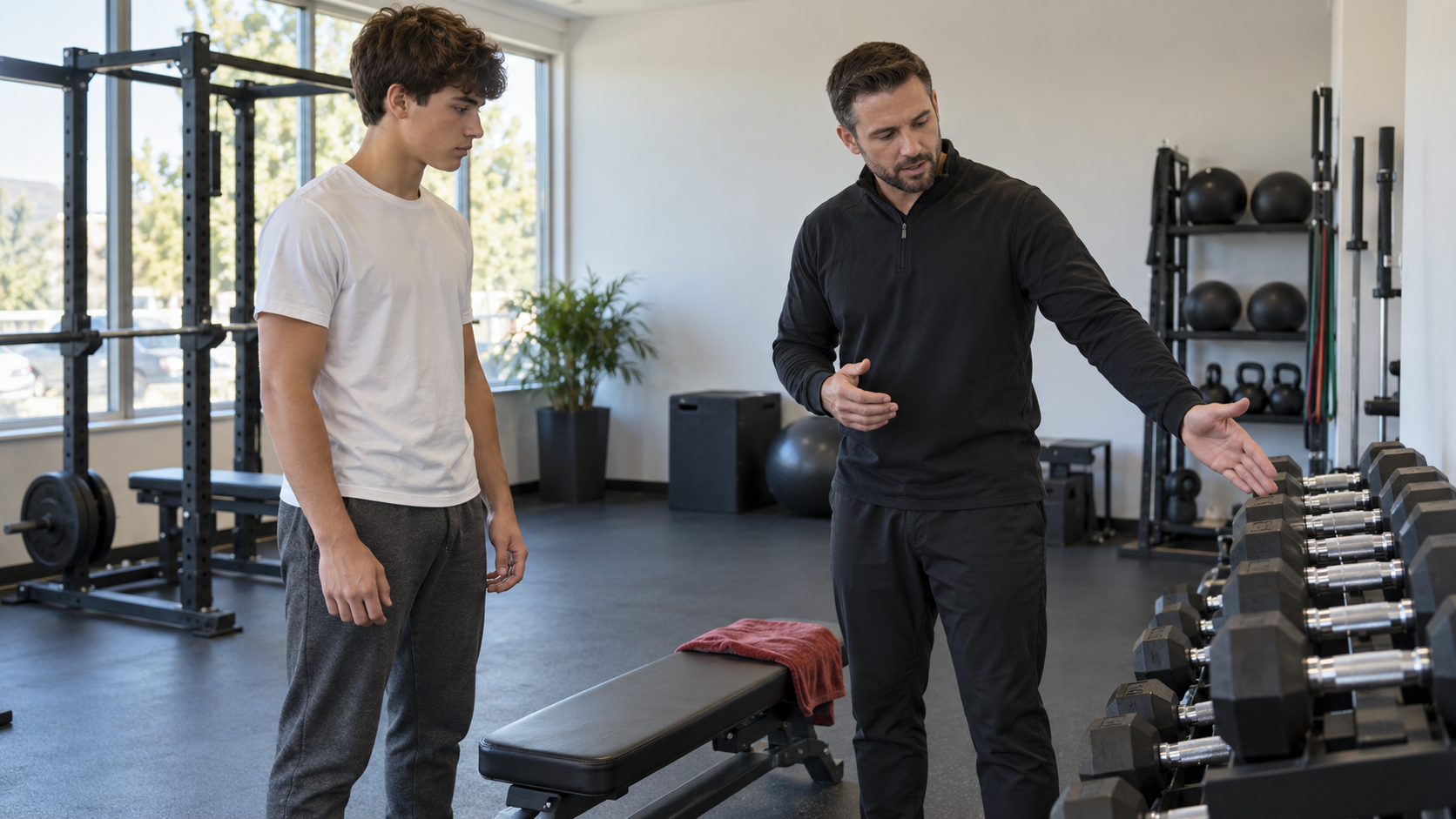
A common misconception about resistance training, particularly high-intensity protocols, is that it poses a high risk of injury for adolescents. Research and guidance support developmentally appropriate, supervised resistance training; that is not a blanket safety finding for every heavy-load protocol or individual. A 2010 review reported that when adolescents participate in supervised resistance training programs with proper technique and appropriate progression, the injury rates are minimal. Most injuries occur due to improper form, unsupervised training, or excessive training loads.
As such, the key to ensuring safety lies in proper supervision by qualified professionals. They can monitor form, load selection, and progress, as well as in incorporating injury prevention measures such as dynamic warm-ups and static cool-downs. Despite the low injury risk, there is still the potential for overtraining and impairments in growth and development if not managed carefully. Adolescents are particularly susceptible to overtraining.
To mitigate these risks, experts recommend balancing high-intensity sessions with adequate recovery periods. Training frequency should typically not exceed three sessions per week, and each session should be followed by at least 48 hours of recovery. Regular monitoring for signs of fatigue and adjusting training loads can help maintain a healthy balance between intensity and recovery.
How can progression reflect developmental needs?
Designing effective HIRT programs for adolescents requires consideration of their developmental needs, fitness levels, and goals. Programs should begin with a familiarization phase, during which participants learn proper techniques. From there, they gradually acclimate to the demands of resistance training. This introductory phase is crucial for minimizing injury and ensuring long-term adherence to the program. Following familiarization, progression should reflect demonstrated technique, training experience and developmental needs rather than automatically moving every adolescent to high loads.
For athletes, sport-specific conditioning should be incorporated. For non-athletic youth, general fitness improvements and health outcomes should be prioritized. Supervision by certified professionals is paramount to the success of HIRT programs for adolescents. Trainers should provide hands-on guidance, ensuring that participants use the correct form and adhere to safety protocols. Additionally, educating adolescents about the importance of progression, recovery, and nutrition, empowers them to train responsibly and make informed decisions about their fitness.
Incorporating HIRT into school curricula and youth sports programs offers a practical way to promote widespread participation. By embedding resistance training into physical education classes, schools can teach fundamental movement skills while fostering a culture of fitness. Similarly, youth sports programs can integrate HIRT to enhance athletic performance and reduce injury risk.
How can evidence guide program decisions?
HIRT is an innovative approach to improving the physical and mental well-being of adolescents. By enhancing muscular fitness, cardiometabolic health, and psychological resilience, HIRT addresses many of the challenges posed by modern sedentary lifestyles. While its implementation requires careful planning and expert supervision, benefits and risks depend on the individual and program. As research continues to shed light on the long-term effects of HIRT in youth populations, its potential to redefine adolescent fitness becomes increasingly apparent.
By embracing this evidence-based approach, educators, coaches, and policymakers can empower adolescents to lead healthier, more active lives.
References
American Academy of Pediatrics. (2020). Resistance training for children and adolescents. Pediatrics.https://publications.aap.org/pediatrics/article/145/6/e20201011/76942/Resistance-Training-for-Children-and-Adolescents?autologincheck=redirected
Assunção, A. R., Bottaro, M., Ferreira-Junior, J. B., Izquierdo, M., Cadore, E. L., & Gentil, P. (2016). The chronic effects of low- and high-intensity resistance training on muscular fitness in adolescents. PLOS ONE. https://journals.plos.org/plosone/article?id=10.1371/journal.pone.0160650
Faigenbaum, A. D., & Myer, G. D. (2010). Resistance training among young athletes: Safety, efficacy, and injury prevention effects. British Journal of Sports Medicine, 44(1), 56-63. https://pmc.ncbi.nlm.nih.gov/articles/PMC3483033/
World Health Organization. Adolescent health. https://www.who.int/health-topics/adolescent-health
Pull Quotes:
“WHO defines adolescence as ages 10–19, a period of rapid physical, cognitive and psychosocial development.”
“As a foundation for athletic performance, building strength during adolescence can help reduce the risk of musculoskeletal injuries later in life.”
“The efficiency of HIRT can enhance adherence, fostering the establishment of lifelong fitness habits.”