
Dietary Nitrate and Oxygen Uptake: What Studies Show
In this article
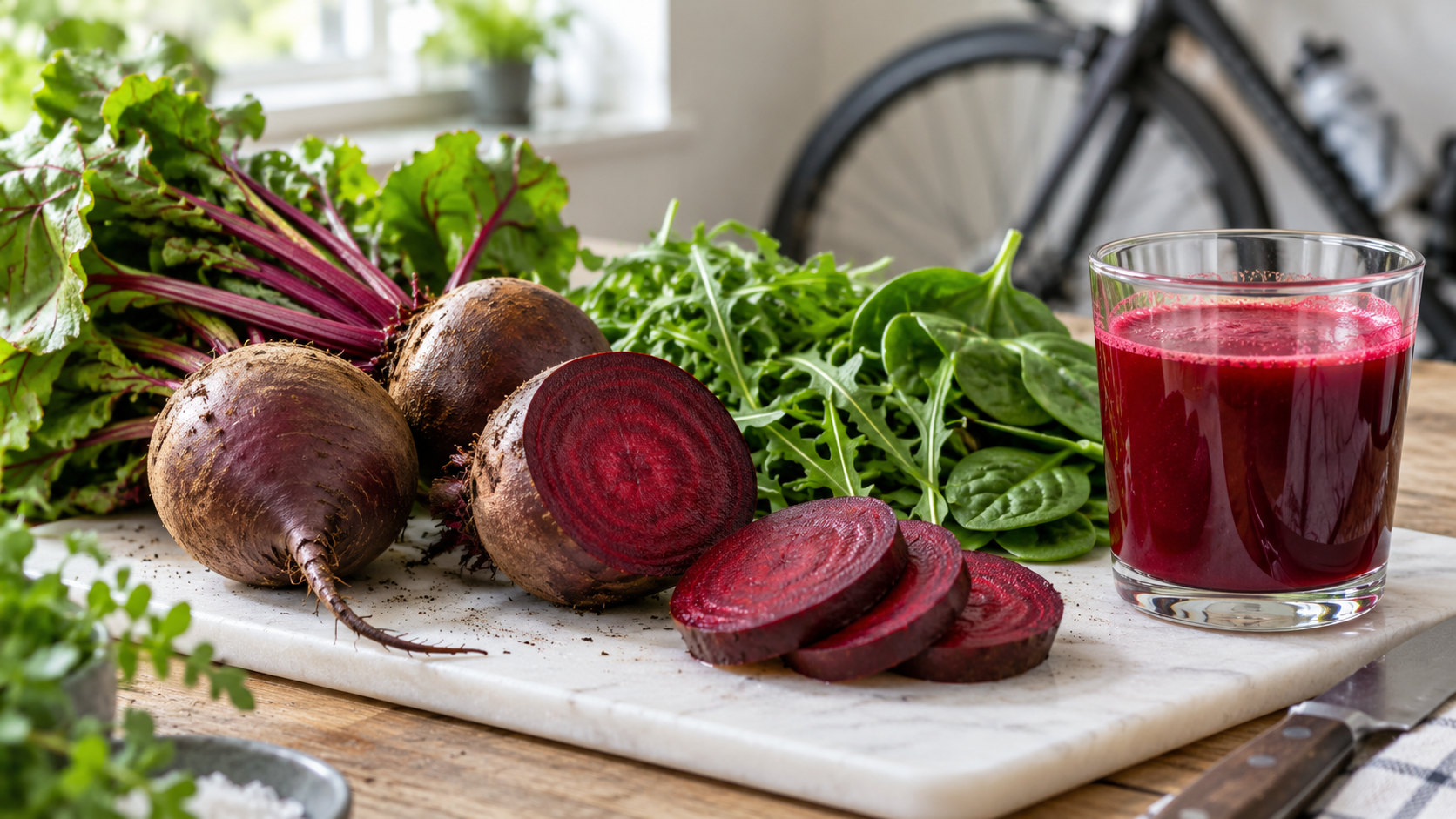
Dietary nitrate has lowered the oxygen cost of exercise and improved performance in some small trials. The results vary with the athlete and the exercise test. Beets, spinach, arugula and kale contain nitrate, while many experiments use a specific nitrate-rich beetroot drink.
Using less oxygen for the same work is an appealing prospect. It may help an athlete sustain an effort longer or produce more work.
How can dietary nitrate affect oxygen use?
The body can convert nitrate to nitrite and then nitric oxide. Nitric oxide helps regulate several processes relevant to exercise, including blood vessel function and muscle activity. Researchers are interested in how this pathway might influence both oxygen delivery and the energy required for contraction.
Muscle efficiency concerns the energy needed to perform work. Oxygen uptake is one way to study that demand during aerobic exercise. A lower oxygen cost means less oxygen is used for a fixed workload. Maximum oxygen uptake, or VO2 max, describes the upper limit reached during testing. They answer different questions.
What did beetroot juice studies find in cyclists?
In a 2009 study, Bailey and colleagues gave eight healthy men beetroot juice or a control drink over six days. Testing took place during the final three days. With beetroot juice, oxygen cost was lower during submaximal cycling and tolerance of intense exercise improved.
A 2011 trial moved to simulated competition. Nine club-level male cyclists tried nitrate-rich beetroot juice and nitrate-depleted juice. They completed time trials over 4 kilometers and 16.1 kilometers. With nitrate-rich juice, they produced more power at similar oxygen uptake. Their times improved by an average of 2.8% over 4 kilometers and 2.7% over 16.1 kilometers.
Both experiments used small groups, specific drinks and controlled tests. Keep those conditions in mind when comparing the findings with a meal or your own event.
What changes when oxygen is less available?
Exercise becomes harder when the available oxygen falls, as it does at altitude. In a 2014 double-blind crossover trial, Kelly and colleagues tested 12 healthy participants after three days of nitrate-rich or nitrate-depleted beetroot juice. They cycled while breathing normal air (20.9% oxygen) or low-oxygen air (13.1%). Nitrate-rich juice raised blood nitrite before exercise in both conditions.
In low oxygen, the nitrate-rich drink lowered the oxygen cost of moderate cycling and helped oxygen uptake adjust more quickly as exercise began. During severe cycling in low oxygen, participants lasted an average of 214 seconds with nitrate-rich juice, compared with 197 seconds with the control drink. That tolerance benefit was absent in normal oxygen.
Oxygen-uptake response speed showed no significant change during severe cycling in low oxygen, or during either intensity in normal oxygen. The benefit depended on both the oxygen conditions and the exercise being tested.
Jones and colleagues’ 2018 review explored muscle efficiency and contractile function. It included possible mechanisms involving Type II, or fast-twitch, fibers. Those possibilities are relevant to hard efforts, where producing force quickly matters. Tests of the actual activity help show whether those mechanisms translate into a performance benefit.
Do nitrate results differ between sprints and shuttle running?
Two studies by Wylie and colleagues illustrate why the test matters. A 2013 experiment involved recreational male team-sport players. They completed the Yo-Yo intermittent recovery test: repeated shuttle running. Distance covered was 4.2% greater with nitrate-rich beetroot juice than with nitrate-depleted juice.
A separate study, published online in 2015 and in print in 2016, examined repeated cycling efforts. Ten male team-sport players completed different work-and-rest patterns. Nitrate-rich juice improved mean power during twenty-four 6-second sprints separated by short recoveries. It did not improve mean power in the longer 30-second and 60-second effort protocols.
The brief-sprint benefit and the two null results belong together. Effort length and recovery time change what the test asks of an athlete.
What should athletes consider before using a nitrate product?
Training status is another part of the picture. Results differ across populations. Highly trained athletes may respond differently from recreational exercisers. Taking more nitrate is not a reliable way to overcome a disappointing result.
Vegetables remain useful foods whether or not a supplement changes a stopwatch result. Including greens and beets in meals is different from copying a research protocol with a concentrated product. Before considering a supplement, look at the event, the product, personal health and the rest of the diet.
Dietary nitrate has earned its place in exercise research. It offers a possible advantage in some settings, alongside the training, food and recovery that make sustained performance possible. It cannot replace them.